Do You Tip in Italy? The Honest Answer — Plus the Coperto Charge
Do you tip in Italy? Short answer: no, not the American way. How tipping actually works, what the coperto on your bill is, and the rare times you leave something.
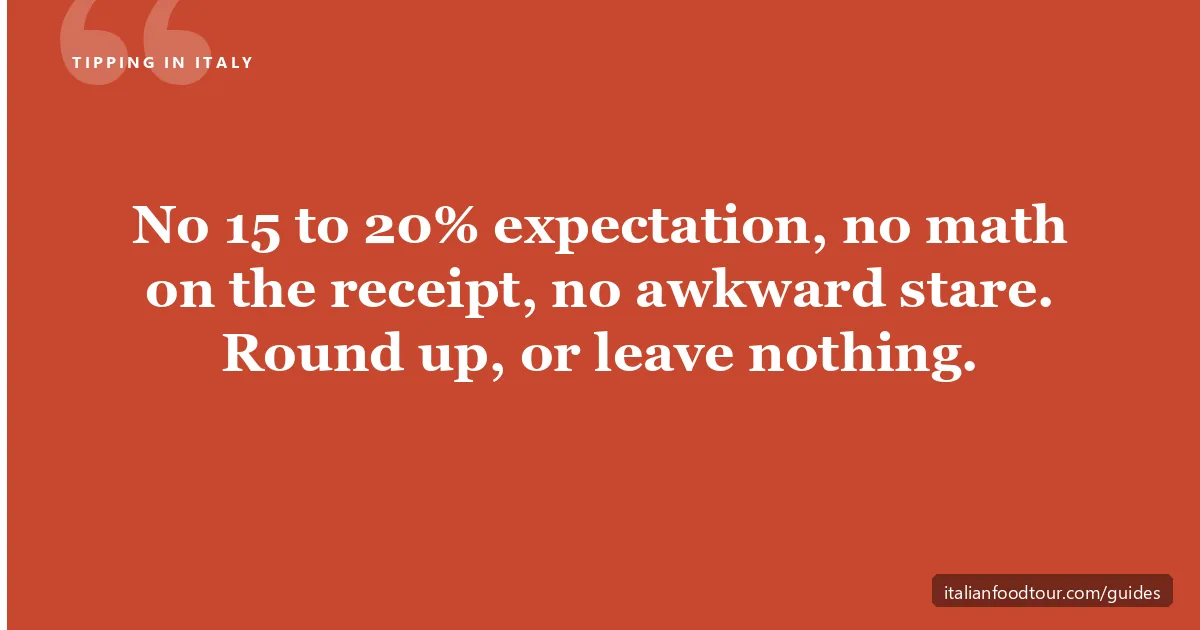
Let me answer the question you actually came here for, before anything else: do you tip in Italy? No — not the way you do at home. There is no 15–20% expectation, no math on the back of the receipt, no awkward stare from the waiter. Service is generally treated as included in the price. You can leave a euro or two if something was lovely, and that’s genuinely it.
The confusion almost always comes from one thing: a charge that’s already on your bill that you didn’t add. That’s not a tip, and it’s not a scam. It’s the coperto. Let me untangle the whole thing.
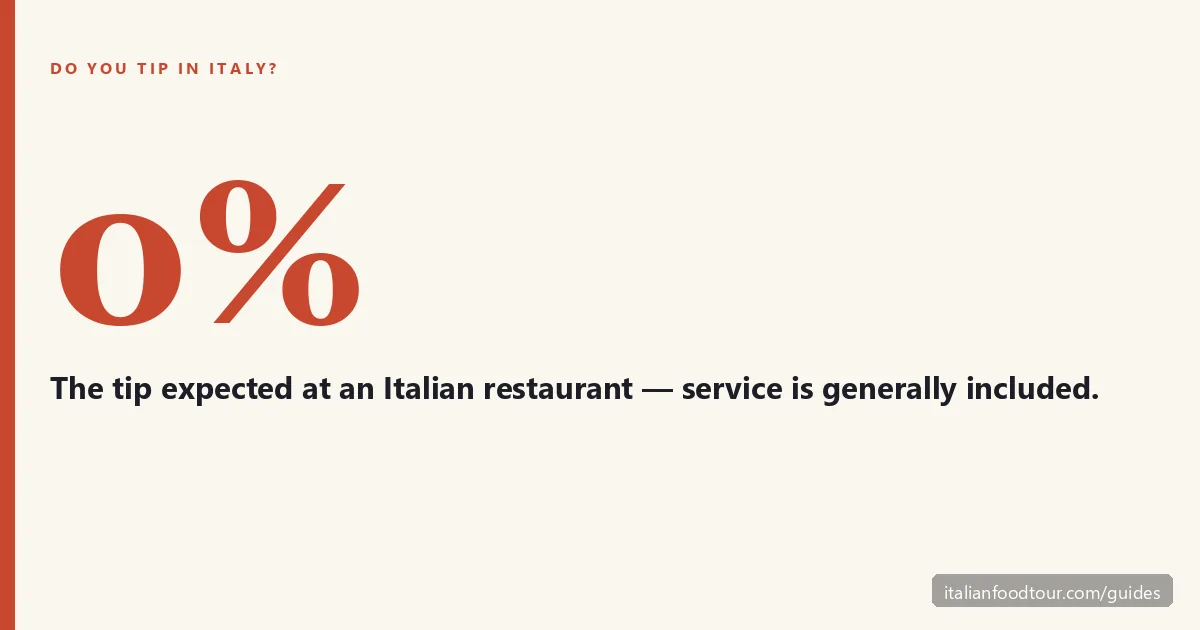
How tipping actually works in Italy
Tipping (la mancia) is a small, optional gesture — not a system. Here’s the honest version, situation by situation:
- Sit-down restaurant: Round up to the nearest euro or two, or leave nothing. For genuinely great service or a special meal, a few euros — or rounding a €54 bill up to €60 — is a warm gesture. Nobody expects a percentage.
- Coffee at the bar: No tip. Some locals leave the small change from their espresso on the counter; you don’t have to.
- Taxi: Round up to the nearest euro (“keep it” — “tenga pure”). Not expected, but easy.
- Hotel: A euro or two for housekeeping or a porter is a kind touch, not an obligation.
The one rule that matters: leaving a big American-style percentage doesn’t read as generous here — it reads as a tourist who didn’t know. A modest round-up reads as someone comfortable.
So what’s that charge on my bill? (Coperto, explained)
This is the part that makes people feel ripped off, and it almost never is.
Coperto is a per-person cover charge, usually €1.50–3 (occasionally up to €5 in heavy tourist zones). It covers the table setting, the bread, and the simple act of sitting down to eat. Two things to know:
- It is not a tip. It goes to the restaurant, not your server, so it doesn’t replace or count as a gratuity.
- It has to be printed on the menu. This is the real test. A coperto listed on the menu is normal and legal. A coperto that appears on your bill but was nowhere on the menu is the genuine red flag — that’s when you push back.
You may also see two close cousins:
- Servizio — an actual service charge (often 10–12%), more common at touristy spots and for larger groups. If servizio is on the bill, you definitely don’t add a tip on top — the service is now literally paid for. In parts of Rome you’ll see servizio or a pane (bread) charge instead of the word coperto; same idea, different label.
- Pane — a bread charge. It’s not a free starter you can wave away; it’s part of the cover.
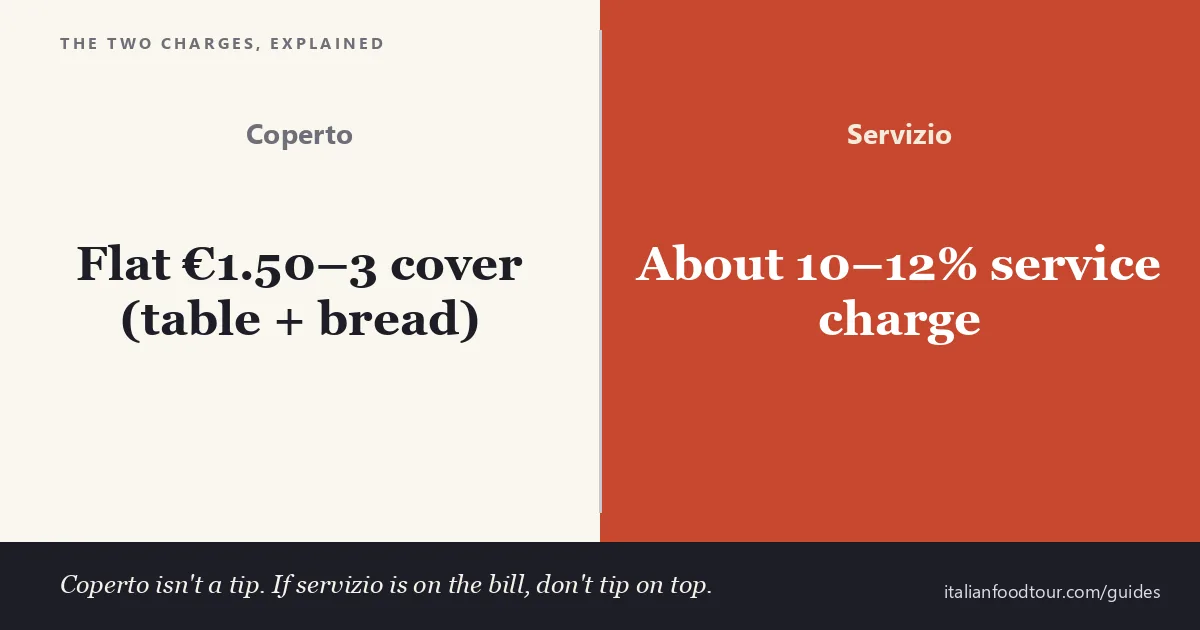
Put the pieces together and most “I got overcharged in Italy” stories dissolve. You weren’t scammed — you were charged a €2 coperto you didn’t know to expect, by a place happy to let you not know.
Cash, card, and the few times you should leave something
- If you tip, leave cash. Card machines in Italy usually have no “add tip” line, and a tip added to a card often won’t reach the server cleanly. A coin or two left on the tray is the normal way.
- Genuinely leave a little when: the service went out of its way, it’s a small family place, you had a long lovely table, or a big group (where servizio may already apply — check first).
- Don’t stress when you leave nothing after a quick lunch. That’s completely normal and no one is offended.
The honest shortcut
You can hold all of this in your head — or you can watch a local do it once and never think about it again. That’s the quiet value of a food tour or a cooking class early in your trip: someone who lives there orders, the bill comes, they round up by a euro, they explain the coperto line without making it weird — and from then on, every Italian bill is just a bill. For the Rome trip especially, it’s the difference between flinching at the receipt and not giving it a second thought.
Coperto, servizio, the tip — none of it is a test you can fail. It’s just a different system than the one you grew up with. Now you know it.
Tipping in Italy — Quick Answers
Do you tip, how much, and what that coperto charge really is.
No. Tipping is optional and never a percentage. Round up or leave a couple of euros for great service; leaving nothing after a casual meal is completely normal.
No. Not tipping is completely normal and isn't considered rude — service is treated as included. Nothing happens if you leave nothing after a casual meal; a round-up is a nice touch, never an obligation.
A flat €20 is far more than expected — it reads as a tourist who didn't know the norm. Even on a €200 dinner there's no 15–20% rule: rounding up, or leaving €5–10 for genuinely exceptional service, is already generous.
Best not to — machines rarely have a tip line and it may not reach the server cleanly. If you want to tip, leave cash: a coin or two on the tray is the normal way.
Taxis: round up to the nearest euro, optional. Coffee at the bar: no tip needed, though some locals leave the small change from their espresso on the counter.
No. It's a per-person cover charge that goes to the restaurant for the table and bread — separate from any (optional) tip.
Literally cover. It pays for the table setting, bread, and the act of sitting down to eat. Usually €1.50–3 per person, and it must be printed on the menu.
Coperto is a flat per-person cover; servizio is a percentage service charge (≈10–12%), more common at touristy spots and for larger groups. If servizio is on your bill, don't add a tip on top.
Mostly you can't — it's a standard per-person charge at any sit-down place, and it's legitimate as long as it's on the menu. The only real way around it is to skip table service: eat standing at the bar, or grab takeaway like pizza al taglio or a panino, where there's no cover.
Usually €1.50–3 per person, occasionally up to €5 in heavy tourist zones. It's a flat charge per head, not a percentage of the bill.
No — as long as it's printed on the menu. If it appears on the bill and wasn't on the menu, that's the one time to question it.
Still have questions? Email us at info@italian-food-tour.com
Let a Local Handle the Bill (Once)
The fastest way to stop second-guessing the tip and the coperto is to go out once with a local. On a small-group food tour they order, they pay, they explain it — and you never stress about an Italian bill again. Free cancellation.
Browse Italian Food Tours